All Categories
Featured
HMO vs PPO: Finding the Plan
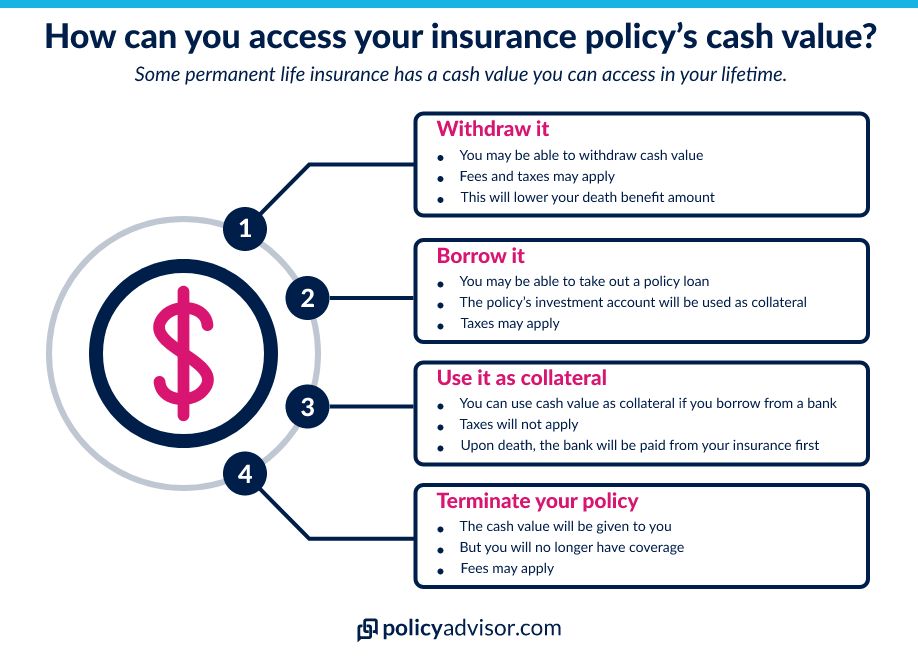
It's likewise an excellent choice if you believe you'll require to adjust your premium and death advantage. You may not require a life insurance coverage policy after you've paid off your debts and conserved for your big financial goals, like retirement and your kid's college education. In these scenarios, a term life insurance policy with a different retirement fund and other savings lorries might use what you need, and at a lower price. An independent agent can stroll you through your options to discover the best protection quantity for the best rate with a respectable insurance provider. Once you have a few quotes, you should: Compare coverage limitations, estimated regular monthly payments and administrative or management fees that feature each policy. Pick a policy and an insurance provider. The company might ask you to go through a phone interview or medical examination. When authorized, begin paying premiums regularly. Indexed universal life insurance coverage offers long-term protection with a survivor benefit and a cash value that grows based upon underlying investments. You can either allocate the money value portion in a fixed account, an indexed account or both.
These are intricate policies that might require some oversight, so it is necessary to work with a financial planner or another accredited expert before selecting one. You might also compare IUL policies versus other kinds of life insurance to see what works best for your circumstance. Depending upon who you ask, indexed universal life (IUL) insurance is either an effective wealth-building method or an overly complex insurance product that assures more than it delivers. The truth could lie someplace in the middle . An IUL is very first and foremost a life insurance policy. Like other irreversible life insurance products, it can supply lifelong coverage and construct cash value gradually. Instead of earning a set interest rate, it's connected to the performance of a stock market index, such as the S&P 500. Here's how indexed universal life insurance coverage works, who it may be an excellent fit for, and what to know before buying a policy. Indexed universal life insurance coverage is a kind of irreversible life insurance that combines a survivor benefit with a money value account. Unlike whole life insurance, which credits your money value at a fixed rates of interest, an IUL ties your cash worth growth to the performance of a market index, such as the S&P 500, the Dow Jones Industrial Average, or the Nasdaq Composite(for this reason the "indexed"part of the name). Every premium payment you make for a UIL policy is usually split 3 methods: As with all cash worth life insurance, you may have the ability to borrow versus your balance, withdraw funds, or even use it to help cover future premiums. Rather, the insurance coverage business uses the index as a benchmark to determine how much interest to credit to the cash worth part of your policy. If the index carries out well, your money value may earn more interest. If the index has a bad year, your credited interest might be lower(often even 0%), depending upon your policy's terms. If your policy credits the.
full 10%, your cash worth might earn about $5,000 in interest before charges and policy charges. When you hear that an IUL's cash value is connected to the stock exchange, you may presume you'll earn whatever the marketplace earns. That's seldom how it works. A cap is the maximum interest your policy can make throughout a crediting period. You can usually discover your cap in your policy illustration or files.
Even though the index increased by 15 %, your policy would just be credited 10 % before charges and other policy charges. If your policy has an 80 %participation rate and the index increases 10%, you would receive 8%interest (80%of the index's gain), assuming no cap limits the return. Most indexed universal life policies let you choose in between two types of death advantages: Your beneficiaries get a fixed death advantage throughout the life of the policy.
How IUL Policies Secure Retirement
That versatility can be big if your earnings changes from year to year, or you go through a big life occasion (such as divorce or short-term work leave) and still want to keep your policy in force. It likewise suggests you'll require to pay closer attention to your policy over time.
Insurance in Laguna Hills CAThis table highlights the greatest distinctions: Both whole life insurance and indexed universal life provide you with irreversible coverage that develops money worth, but how that money worth grows is rather different. Entire life insurance coverage usually has ensured growth at a fixed rate, while IUL has the potential for higher returns due to the fact that its money worth is tied to a market index.
Term life insurance is generally the most inexpensive and simplest kind of life insurance coverage to get. It does not build cash value, but you get a guaranteed death advantage for a set time period, often at a fraction of the expense of an IUL policy. You can believe of a variable universal life insurance coverage policy as one step above an IUL policy in regards to danger and benefit.
This implies you'll have higher growth potential but likewise the possibility of financial investment losses. Like any financial item, indexed universal life insurance coverage has advantages and trade-offs. If your main objective is merely changing your earnings for your household, a term life insurance policy is normally simpler and far cheaper.
Common costs might include:, which generally increases as you age for handling the policy deducted from your payments if you include functions like long-term care or chronic disease advantages if you cancel the policy during its early years Before you purchase an indexed universal life policy, the insurance provider will usually offer an illustration demonstrating how your policy could carry out over time.

Latest Posts

Term Insurance Rates for Seniors in the USA
Strategies for Maximum Financial Security with Life Insurance
Selecting the Top 2026 Medicare Supplement Coverage